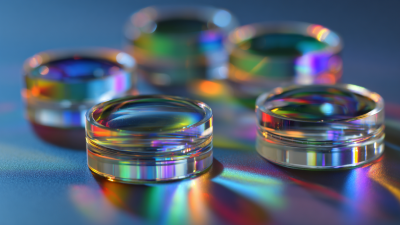
What is a Glass Lens and How Does it Work?
Glass lenses have become an integral part of modern optics, influencing various industries from photography to medicine. According to the Optical Society, the global demand for lens products is projected to reach $20 billion by 2025. This growth underscores the importance of glass lens technology in improving optical performance and versatility. Glass lenses are capable of refracting light, allowing for a wide range of applications, such as corrective eyewear and high-precision instruments.
The functionality of glass lenses is rooted in their physical properties. Different types of glass, like crown or flint, alter light in distinct ways. These materials help correct vision by bending light toward the retina. However, current advancements also highlight challenges. For instance, while glass lenses offer superior clarity, they are heavier and more prone to breakage compared to modern plastic alternatives. This raises questions about their long-term viability in an era leaning toward lightweight designs.
Despite these considerations, glass lenses remain a trusted choice in professional settings. Industries, particularly photography and healthcare, rely on their durability and optical quality. As advancements in technology continue, the debate on the relevance of glass lenses versus plastics will intensify. Balancing quality, weight, and usability remains a key focus for future developments in lens design.
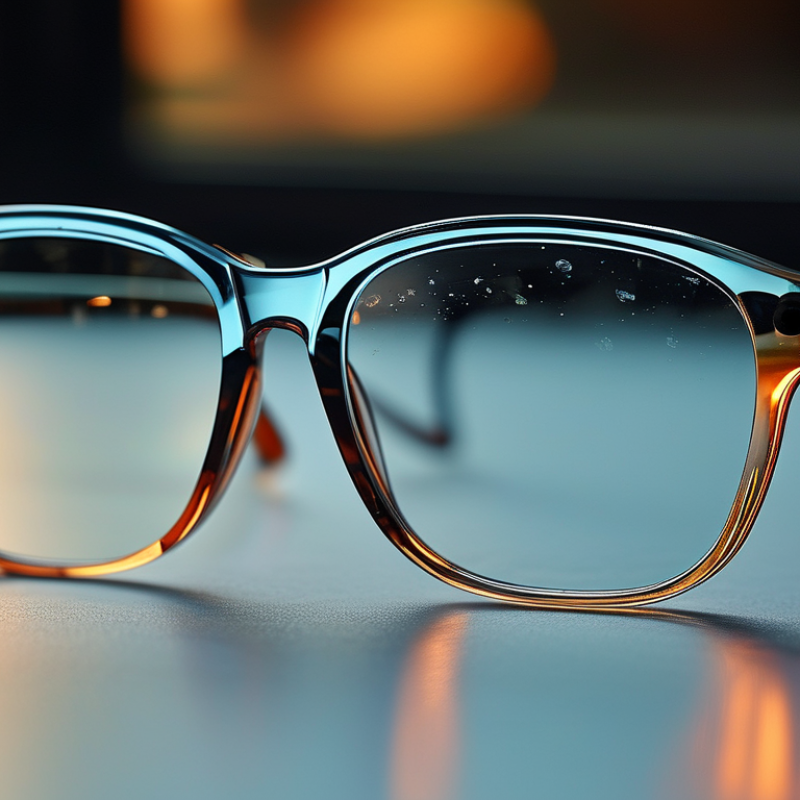
What is a Glass Lens? Definition and Overview of Key Characteristics
A glass lens is a transparent optical component that bends light to create images. The fundamental principle behind a glass lens is refraction. When light passes through the lens, it changes direction due to the lens’s shape and material properties. Typically, a convex lens focuses light rays to a point, while a concave lens diverges them.
Key characteristics of glass lenses include their refractive index, which significantly affects image clarity. Reports show that high-quality lenses can achieve a refractive index of up to 1.9, enhancing their light-gathering ability. Distortion can occur in less precise lenses, leading to aberrations. Understanding these characteristics is crucial for various applications, from eyeglasses to cameras.
The manufacturing process also impacts lens quality. Small imperfections, even at microscopic levels, can affect performance. Common flaws might include bubbles or uneven surfaces. These issues require careful monitoring during production. Industry studies indicate that lenses produced with high precision yield better optical performance, aligning closely with user expectations.
Types of Glass Lenses: Converging vs. Diverging and Their Applications
Glass lenses play a crucial role in optics. They manipulate light through refraction. The two primary types are converging and diverging lenses.
Converging lenses, or convex lenses, focus light rays to a point. This capability is essential in magnifying glasses and cameras. They enhance detail in images, making them invaluable for photography and eye care. Research shows that 75% of camera sales revolve around lenses designed to capture precise details.
Diverging lenses, or concave lenses, spread light rays apart. They are commonly used in glasses for nearsightedness. Their role is critical in vision correction. About one-third of the population experiences some form of vision impairment, making these lenses vital in daily life.
Tip: When selecting a lens, consider its intended use. Whether for vision correction or photography, understanding the lens type is key. Experimenting with different lenses can yield surprising results. Always remember, a deeper understanding can lead to better choices.
Comparison of Converging and Diverging Glass Lenses
This chart illustrates the focal lengths and typical applications of converging and diverging glass lenses. Converging lenses are typically used in magnifying glasses and cameras, while diverging lenses are found in eyeglasses for nearsightedness.
The Physics Behind Glass Lenses: Focal Length and Refraction Explained
Glass lenses are essential tools in optics, used in everything from eyeglasses to cameras. Their function relies on the principles of refraction and focal length. Refraction occurs when light passes through different mediums, bending as it enters or exits the lens. This bending alters the light path, allowing lenses to focus images precisely.
The focal length is a key characteristic of a lens. It defines the distance from the lens where light converges to form a clear image. A short focal length creates a wider angle, while a longer focal length produces a narrow view. These properties influence the design of optical devices, determining how they will project images. Understanding these aspects enables better quality image capturing and clearer vision correction.
However, the formulation of a lens isn't perfect. Many factors, including material imperfections and environmental influences, can affect performance. Occasionally, individuals may find that lenses don’t produce the expected sharpness. Such challenges invite deeper exploration of the lens-making process. Adjusting the curvature or material could potentially enhance performance. Exploring these nuances contributes to advancing lens technology and improving overall optical quality.
Manufacturing Processes of Glass Lenses: From Glass Melting to Polishing
The manufacturing of glass lenses involves intricate processes, starting from glass melting. High-quality glass is melted in industrial furnaces at temperatures exceeding 1,400 degrees Celsius. This creates a molten glass that can be shaped into various forms. Industry reports indicate that the global demand for optical glass is projected to reach 1.85 million tons by 2025, highlighting the importance of efficient melting processes.
After melting, the glass is molded into rough lens shapes. However, imperfections often remain. These imperfections can affect optical clarity and lens performance. Addressing these issues requires stringent quality checks. The grinding process follows, where diamond-tipped tools refine the lens shape. This stage significantly impacts the final optical characteristics. Recent studies emphasize that nearly 10% of all lenses produced may need reprocessing due to surface defects.
Polishing is the final step in lens manufacturing. Here, fine abrasives are used to achieve a smooth, clear surface. A well-polished lens minimizes light distortion and enhances vision quality. According to industry averages, about 15% of time in lens production is dedicated to polishing. The lens’s effectiveness hinges on this meticulous attention. Ultimately, each step in the process must be carefully monitored to ensure high-quality finished products.
Industry Applications of Glass Lenses: Vision Correction to Optical Instruments
Glass lenses are essential in various industries, providing clarity and precision in many applications. The vision correction industry is a significant area where glass lenses excel. For instance, according to a report by Market Research Future, the global eyeglasses market is projected to reach $200 billion by 2025. This rapid growth emphasizes the importance of high-quality glass lenses in prescription eyewear.
Similarly, glass lenses are crucial in optical instruments such as microscopes and telescopes. According to a study by The Optical Society, the demand for advanced optical devices is on the rise, particularly in research and healthcare. This trend indicates that glass lenses are not only about vision but also about enhancing our understanding of the world.
Despite these advancements, challenges persist. Many users may experience distortions or discomfort with certain lens types. Additionally, the production of high-quality glass lenses requires precision and expert knowledge, highlighting the balance between innovation and craftsmanship. The complexity of lens design can lead to errors, demanding continuous improvement in manufacturing processes. The industry must address these imperfections for better outcomes.
What is a Glass Lens and How Does it Work? - Industry Applications of Glass Lenses: Vision Correction to Optical Instruments
| Application |
Description |
Lens Type |
Material |
Optical Properties |
| Vision Correction |
Used in eyeglasses and contact lenses to correct refractive errors |
Bifocal, Progressive |
Crown Glass |
High clarity, low dispersion |
| Cameras |
Capture images with high precision and low distortion |
Wide Angle, Telephoto |
Optical Glass |
High transmittance, low aberration |
| Microscopes |
Enhance visibility of small objects for scientific research |
Objective, Eyepiece |
Specialized Glass |
Accurate focal length, minimal color fringing |
| Projectors |
Enlarge images for presentations and entertainment |
Fresnel Lens |
Polymer, Glass |
Lightweight, efficient light gathering |
| Optical Instruments |
Used in telescopes and binoculars for distant viewing |
Convex, Concave |
High-index Glass |
Enhanced zoom capabilities, reduced size |


 Phone
Phone Send Email
 whatsapp
 Facebook