What Is Wall Washer Glass and How Is It Used?
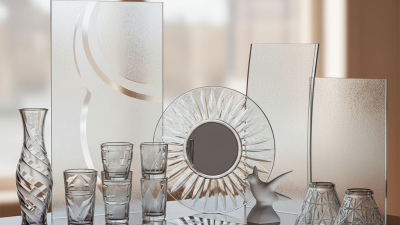
Wall Washer Glass is designed to spread light across a vertical surface, creating a soft, even glow instead of a harsh bright spot. It commonly appears in retail displays, hotels, galleries, offices, and residential interiors. The glass may be textured, etched, laminated, or engineered with optical patterns. Each surface changes how light travels.
Architect and daylighting specialist James Carpenter has said, “Light is not so much something that you see, but something that allows you to see.” His observation explains the purpose of Wall Washer Glass. It is not only a decorative material. It controls brightness, reduces visual glare, and helps define architectural surfaces. A well-planned installation can make a stone wall appear warmer, a product display clearer, or a narrow hallway feel more open.
Details matter.
The glass must work with the light source, mounting distance, wall finish, and viewing angle. Installers often test a small sample first, because printed specifications cannot reveal every reflection or shadow. A poorly positioned LED strip may create bright bands, uneven corners, or visible hotspots. That result is disappointing, but useful. It shows why material selection and lighting design should be considered together.
This guide explains what Wall Washer Glass is, how it distributes light, and where it performs best. It also examines common glass types, installation considerations, maintenance needs, and practical limitations. The term is sometimes used broadly, so buyers should confirm optical performance, safety certification, thickness, and application requirements before ordering.
Definition and Optical Principle of Wall Washer Glass
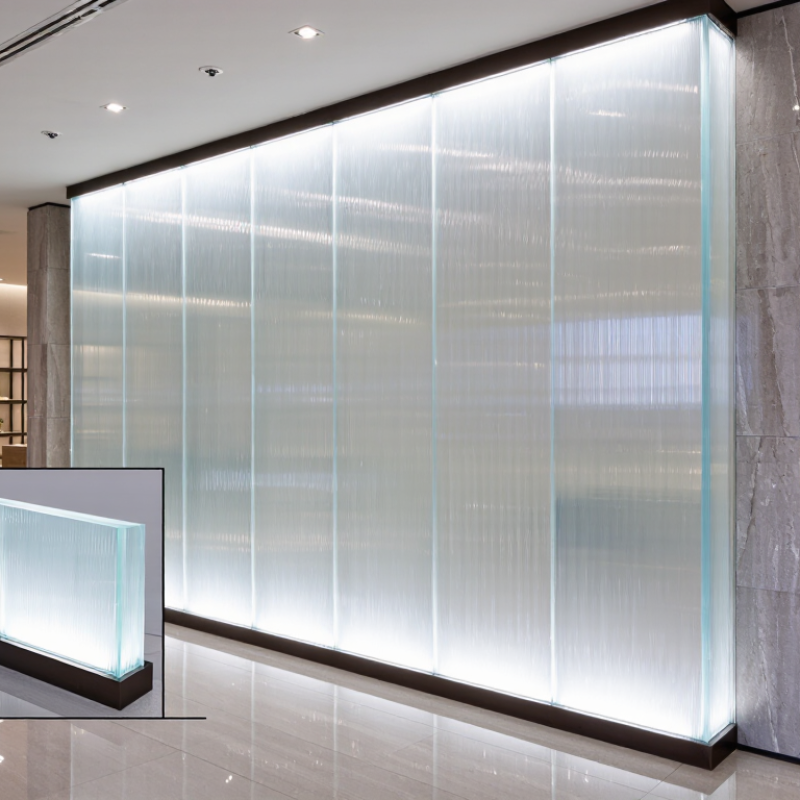
Wall washer glass is a patterned or prismatic glass element designed to redirect light across a vertical surface. The term is not perfectly standardized. In architectural lighting, it usually describes glass with ribs, flutes, dots, or molded prisms. These features change the direction of incoming rays through refraction. Some profiles also create internal reflection before light exits toward the wall.
Its optical principle is simple but highly dependent on geometry. A smooth pane transmits light with limited redirection. A textured surface spreads rays horizontally and vertically. This can soften bright points and create a more even wall wash. For example, a ribbed panel may send light along a plaster wall, while a denser prism pattern produces stronger diffusion near the fixture. The result depends on glass thickness, refractive index, incident angle, surface texture, and the distance from the wall. Small dimensional changes matter.
The U.S. Department of Energy has reported that solid-state lighting can exceed 100 lumens per watt in many commercial applications, making optical control increasingly important. The International Energy Agency also identifies lighting as roughly 10% of global electricity demand. Better distribution may reduce wasted light, but glass alone cannot guarantee efficiency. Dust, imperfect alignment, and uneven wall finishes can weaken the visual effect. Designers sometimes overestimate uniformity. A mock-up remains valuable. Measure illuminance at the top, middle, and bottom of the wall before approving the final profile.
Sources: U.S. Department of Energy, Solid-State Lighting Research and Development; International Energy Agency, Energy Efficiency 2023.
Glass Types, Surface Patterns, and Typical 6–12 mm Thicknesses
What Is Wall Washer Glass and How Is It Used?
Wall washer glass is a shaped or treated panel that spreads light across a vertical surface. It appears in wall lights, architectural fixtures, and illuminated display systems. Unlike plain clear glass, it controls glare and softens bright points. The result can resemble a broad wash of light across stone, plaster, or painted walls. Installation distance matters greatly. A panel placed too close may create visible bands instead of an even glow.
Glass Types, Surface Patterns, and Typical 6–12 mm Thicknesses
Common glass types include clear, frosted, opal, low-iron, tempered, and laminated glass. Clear glass gives stronger transmission but reveals more internal hardware. Frosted and opal surfaces create softer light with less visual contrast. Low-iron glass can improve color clarity, especially with pale lighting. Tempered glass suits many exposed installations, while laminated glass can retain fragments after breakage.
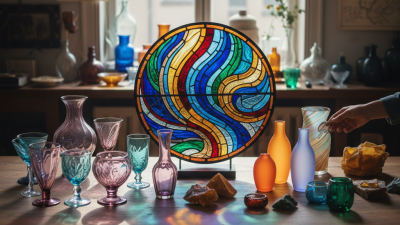
Surface patterns change the lighting effect. Ribbed lines stretch light vertically or horizontally. Stippled textures scatter it in multiple directions. Prismatic patterns can guide light more efficiently, but they may produce sharper highlights. Thicknesses usually range from 6 to 12 mm. Six millimeters works for lighter panels and controlled indoor settings. Thicker glass offers greater stiffness for larger formats, framed fittings, or frequent cleaning. Weight increases quickly, however. That detail is sometimes underestimated. On site, designers should check edge support, heat buildup, cleaning access, and the fixture’s optical compatibility. A beautiful pattern may still perform poorly with the wrong light source.
Key Performance Data: Visible Transmittance, U-Value, and Glare Control
Wall washer glass is designed to spread daylight across an interior wall instead of concentrating it near the window. Its surface may use fine ceramic patterns, shallow prisms, or controlled textures. In practice, installers should check orientation, ceiling height, and wall reflectance. A pale matte wall works better than a dark glossy one.
Visible transmittance (VT) shows how much visible light passes through the glass. Data from the International Glazing Database indicates that many double insulating units with low-emissivity coatings provide VT values around 0.45–0.70. Higher VT can brighten a room, but it may also increase screen reflections and visual discomfort. More light is not always better.
U-value measures heat transfer. Typical high-performance double glazing falls near 1.1–1.8 W/m²·K, depending on cavity gas, coatings, framing, and installation. Lower is better. However, glass data alone can mislead; the frame and edge spacer often reduce whole-window performance. For glare control, daylight research commonly treats a Daylight Glare Probability above 0.45 as disturbing. External shading, frit density, and viewing angle should therefore be tested together. A wall washer pattern can soften bright patches, but it cannot fix poor solar orientation. That limitation deserves more attention.
Manufacturing and Testing Under EN 410 and ASTM C1036 Standards
Wall washer glass is patterned or textured glass designed to spread light across nearby walls. It reduces harsh glare and creates a softer, more even appearance. Common uses include interior partitions, decorative doors, retail displays, and illuminated ceilings. Its surface pattern may resemble fine ripples, linen, or shallow waves. Each texture changes the light differently.
Manufacturing usually begins with molten glass passing between forming rollers. One roller imprints the surface pattern. The sheet is then annealed, cut, and inspected for distortion, scratches, bubbles, and edge damage. ASTM C1036 provides requirements for flat glass quality, dimensions, and visible imperfections. It helps manufacturers judge whether a sheet is suitable for architectural use. EN 410 focuses on optical and solar properties. Laboratories measure light transmission, reflection, and related energy values using controlled spectral data. A spectrophotometer can reveal performance that looks acceptable to the eye but behaves differently in daylight. Testing is useful, but it is not magic. Results depend on thickness, texture, coating, and sample preparation.
Tips:
Request the actual test report, not only a general compliance statement. Check whether EN 410 values represent the selected thickness and finish. View large samples under both daylight and artificial lighting. Small samples can hide uneven diffusion. Even careful production may leave minor visual variation, so acceptance limits should be agreed before installation.
Installation Uses in Facades, Skylights, Interiors, and Daylight Design
What Is Wall Washer Glass and How Is It Used?
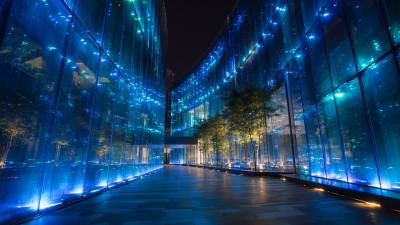
Wall washer glass is patterned, textured, or translucent glass that spreads daylight across a nearby wall. The term is not fully standardized, so specifications must define the surface pattern, visible transmittance, and glare performance. In facades, installers use it as a light-filtering layer, helping soften harsh reflections while preserving privacy. Low-iron glass can improve brightness, but it may also increase glare without careful shading.
In skylights, wall washer glass can guide diffuse light down a corridor, stairwell, or atrium. A 600 mm overhang may noticeably reduce direct summer sun, though the result depends on orientation and climate. Interior partitions use the same principle near reception areas, bathrooms, and galleries. The glass can create a bright wall plane instead of a sharp pool of sunlight. The International Energy Agency reports that buildings consume about 32% of global energy. Better daylight design may reduce electric lighting demand, but glass alone cannot deliver that result.
Tips: Request daylight simulations before approval. Check illuminance at eye level, not only near the window. The U.S. Department of Energy recommends combining daylight with responsive lighting controls. Use mock-ups to inspect shadows, fingerprints, and night-time reflections. I have seen attractive samples fail after installation because the wall finish was too dark. That mistake is easy to miss. Reconsider the glass orientation, maintenance access, and drainage details before fabrication.


 Phone
Phone Send Email
 whatsapp
 Facebook