How to Choose the Best Anti Glare Glass for Your Needs?
Choosing the right Anti Glare Glass can significantly enhance your visual experience. A report from the Vision Council highlights that over 60% of adults experience digital eye strain. This issue arises from prolonged exposure to screens. Anti Glare Glass combats this problem by reducing reflections and glare, leading to improved comfort during use.
Moreover, the global demand for Anti Glare Glass is increasing year by year. Research shows that the market is projected to grow at a CAGR of 5.7% through 2026. This trend is driven by the rising number of tech devices. Whether for eyewear, monitors, or displays, selecting the right type is crucial. Yet, many consumers struggle with this decision. Factors such as thickness, coating, and durability should all be considered carefully.
While the benefits of Anti Glare Glass are clear, potential buyers often overlook their specific needs. It’s essential to assess personal usage. A one-size-fits-all approach may lead to dissatisfaction. In this evolving market, making an informed choice is vital for achieving the best visual comfort and protection.

Understanding Anti-Glare Glass: Definition and Benefits
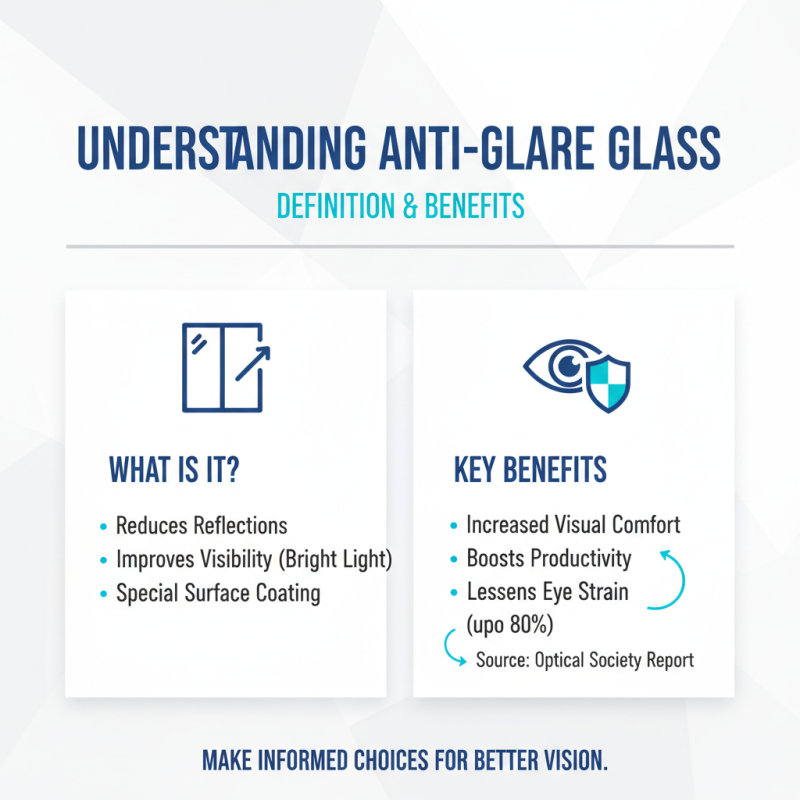
Anti-glare glass is designed to reduce reflections and improve visibility. This is particularly beneficial in environments with bright lighting. A recent report from the Optical Society indicates that glare can decrease visual comfort by up to 80%. This disrupts productivity and increases eye strain. Understanding how anti-glare glass works is essential for making informed choices.
The benefits of anti-glare glass are numerous. Users report a significant reduction in eye fatigue. A study by the American Optometric Association found that about 60% of individuals frequently experience discomfort from glare. Anti-glare coatings help mitigate these issues, enabling clearer vision, especially in outdoor settings. These glasses not only enhance clarity but also promote relaxation during prolonged usage.
Choosing the right type of anti-glare glass can be daunting. Factors such as lens material and coating quality affect performance. Some coatings are more effective than others, with varying durability. Research suggests that users should consider their specific needs, as not all anti-glare options will meet every requirement. It’s wise to explore different specifications and engage with professionals for tailored recommendations.
Types of Anti-Glare Glass Available on the Market
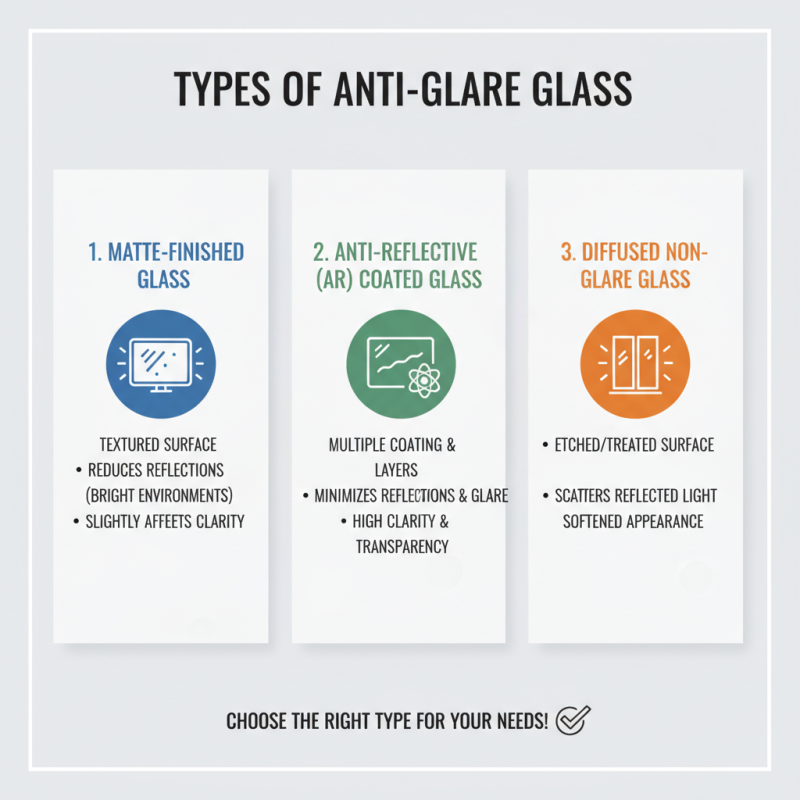
When selecting anti-glare glass, understanding the available types is crucial. Various options serve different needs, be it for screens or eyewear. One common type is matte-finished glass. This has a textured surface, reducing reflections noticeably. It works well in bright environments. However, some users find it affects clarity.
Another option is coated anti-glare glass. This glass includes a special coating that absorbs or reflects light. It minimizes glare while maintaining visual clarity. It’s popular for computer screens and can aid in reducing eye strain. Users should consider how well these coatings resist smudges. Some coatings may require more frequent cleaning.
Last, polarized anti-glare glass offers unique benefits. It’s especially effective for outdoor use. This type filters horizontal light waves, significantly cutting down glare. However, it can distort some images at certain angles. It's essential to evaluate where you'll use the glass. Balancing these options can lead to a better choice for individual needs.
Factors to Consider When Choosing Anti-Glare Glass
Choosing the right anti-glare glass involves several important factors. First, consider the intended use. Anti-glare glass is ideal for environments with bright lighting or reflective surfaces. It reduces glare effectively, enhancing visibility and comfort. If the glass will be used for screens, ensure it has a matte finish to prevent reflections.
Next, evaluate the thickness and durability of the glass. Thicker glass may provide better resistance to scratches and breakage. However, this could also add weight. Think about where the glass will be installed. Heavy glass can be challenging to handle during installation.
Finally, think about aesthetic preferences. Anti-glare glass comes in various tones and finishes. The choice can significantly affect the overall look of the space. Keep in mind that not all options will meet your exact needs. Test different types of anti-glare glass before making a final decision. This trial and error process can lead to better choices later.
Evaluating the Optical Clarity and Color Accuracy of Glass
When choosing anti-glare glass, evaluating optical clarity and color accuracy is essential. Eye fatigue can occur with low-quality glass. You want to ensure that colors remain true and vivid. Poor clarity can distort your view, making it hard to see fine details.
Consider the light transmission of the glass. It should block glare while allowing enough light to pass through. Some anti-glare coatings can reduce brightness, leading to a dull image. Understanding how these coatings interact with light is crucial for your needs.
Tips: Test the glass under various lighting conditions. Observe how it performs in bright sunlight and dim environments. You might notice some distortions or color shifts. These observations can inform your final choice. Strive for a balance between glare reduction and visual fidelity. Opt for samples before making a decision. A small investment in time can enhance your satisfaction with the product.
How to Choose the Best Anti Glare Glass for Your Needs?
| Dimension |
Type |
Optical Clarity |
Color Accuracy |
Recommended Use |
| Standard Anti Glare |
Flat |
High |
Good |
Office Use |
| Premium Anti Glare |
Curved |
Very High |
Excellent |
Photography |
| Anti Reflective |
Flat |
High |
Very Good |
General Use |
| Blue Light Filtering |
Curved |
Moderate |
Good |
Gaming |
| Anti Glare Multi-Coat |
Flat |
High |
Excellent |
Professional Settings |
Application-Specific Recommendations for Anti-Glare Glass
Anti-glare glass is essential for various applications. Different environments have unique requirements. For instance, you may need anti-glare glass for office spaces, digital displays, or even eyewear.
In a typical office, the right anti-glare glass can reduce eye strain. According to the American Optometric Association, 50% of people experience discomfort from screen glare. Choosing the right type can enhance productivity and comfort.
Tip: Always consider the lighting conditions in your workspace. Different coatings work better under various light sources.
For digital displays, such as monitors or TVs, a matte finish works well to reduce reflection. Research states that screens with anti-reflective coatings can improve visibility by 30%. This is crucial in bright settings.
Tip: Think about the angle of viewing. Anti-glare properties vary based on the glass's tilt and the viewer's position.
Ultimately, the most suitable anti-glare glass will depend on your specific needs. Factors like lighting, usage, and environment should guide your decision. Test different options to discover what works best for you.


 Phone
Phone Send Email
 whatsapp
 Facebook