inquiry
Leave Your Message

What Is the Best Cover Glass for Kiosk in 2026?

Choosing the best Cover Glass For Kiosk in 2026 requires more than comparing thickness and price. A public kiosk faces constant touching, loose keys, rings, cleaning chemicals, sunlight, and occasional impact. Its glass must protect the display without weakening touch accuracy or visual clarity.

Jaymin Amin, a senior Corning innovation leader, has said, “Cover glass is the first line of defense for the display.” That principle remains practical. The strongest option is not always the thickest one. A 2–3 mm chemically strengthened glass may suit indoor ticketing, while outdoor payment kiosks may need better impact resistance, anti-glare treatment, and stronger edge protection.

Small details matter.

A fingerprint-resistant coating can reduce cloudy smears near payment prompts. A low-reflection surface can improve readability under harsh midday light. Proper edge finishing can prevent chips around mounting brackets. However, performance depends on the complete assembly, not glass alone. Frame pressure, adhesive selection, thermal expansion, and touch-sensor design can change the result.

This guide compares the leading glass choices for 2026 kiosks. It considers durability, optical quality, touch response, maintenance, and lifecycle cost. Some recommendations may seem obvious, yet field conditions often prove otherwise. A premium coating can fail when cleaning procedures are too aggressive. Thicker glass can also create unexpected touch or calibration problems.

The right decision balances protection with usability. It should reflect the kiosk’s location, users, cleaning routine, and expected service life.񎟾

What Is the Best Cover Glass for Kiosk in 2026?

What Is Kiosk Cover Glass and Why Does It Matter?

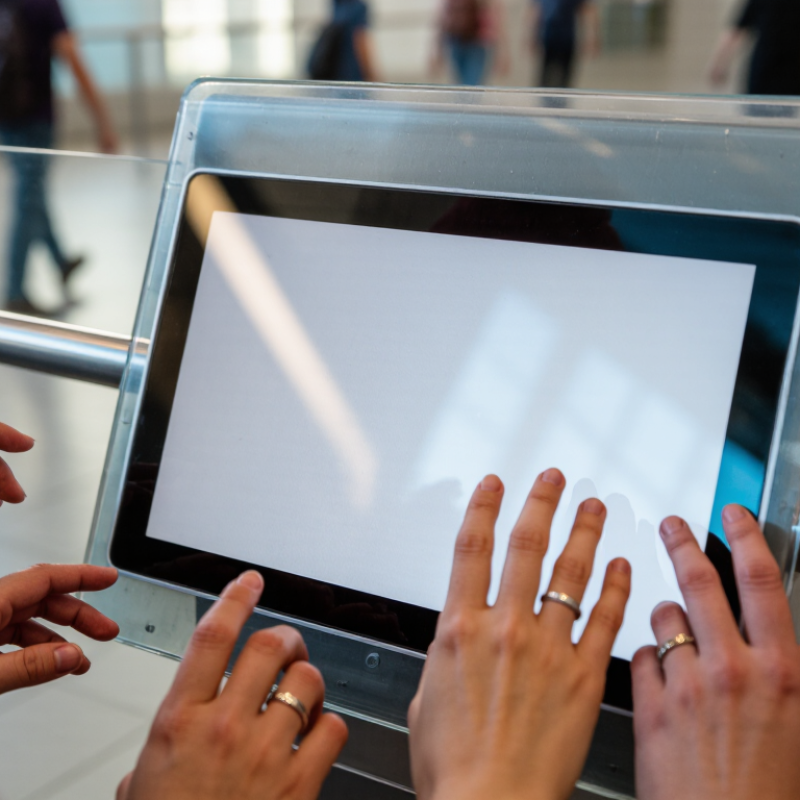
Kiosk cover glass is the transparent protective layer above a display and touch sensor. It faces fingerprints, coins, keys, sunlight, cleaning sprays, and repeated taps. Its job is not merely to look clear. It must protect the screen while preserving touch accuracy and visual comfort.

The best cover glass in 2026 should balance strength, clarity, thickness, and cost. Chemically strengthened glass can resist everyday scratches and edge damage. Anti-glare treatment helps users read screens under bright indoor lighting. An oleophobic surface reduces visible fingerprints. These details matter at a busy transport kiosk. One careless coating choice can make a screen look cloudy within weeks.

Touch performance needs practical testing. Thick glass may reduce sensitivity, especially with gloves or wet fingers. Poor optical bonding can create reflections and trapped air. In my experience, specification sheets rarely tell the whole story. Small changes in lighting can expose weaknesses. No option is perfect. Engineers should test the glass with real gestures, cleaning routines, temperature changes, and impact simulations. Safety also deserves attention. If breakage occurs, the glass should resist dangerous fragmentation and remain suitable for its installation environment. Good cover glass is a quiet component. Users notice it most when it fails.

What Is the Best Cover Glass for Kiosks in 2026?

What Is Kiosk Cover Glass and Why Does It Matter?

Cover glass is the protective glass layer placed over a kiosk display and touch sensor. It helps resist scratches, repeated contact, cleaning chemicals, and accidental impact while preserving optical clarity and touch sensitivity.

This chart shows the calculated mass of flat glass at common thicknesses. The calculation uses a typical glass density of approximately 2,500 kg/m³. Thicker glass can improve rigidity and impact tolerance, but it also increases kiosk weight, structural requirements, and shipping costs.

For many indoor kiosks, 3–4 mm glass may provide a practical balance. Larger public-facing kiosks or installations exposed to frequent impact may require thicker, tempered, or chemically strengthened cover glass after engineering and safety evaluation.

Which Glass Types Are Used for Kiosk Displays?

What Is the Best Cover Glass for Kiosk in 2026?

Which Glass Types Are Used for Kiosk Displays?

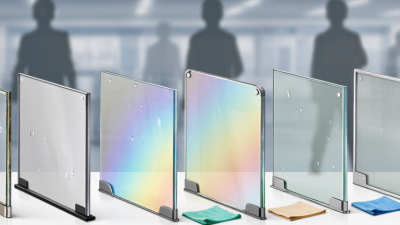
Kiosk displays commonly use tempered, chemically strengthened, or laminated glass. Tempered glass handles impacts and sudden temperature changes well. If it breaks, it usually forms smaller fragments. Chemically strengthened glass can provide high surface strength with a thinner profile. This helps maintain touch sensitivity and reduce overall weight. Laminated glass contains an interlayer between two sheets. After cracking, the fragments remain attached, improving safety in busy public areas.

Anti-glare glass is useful near windows, entrances, and bright overhead lighting. It reduces reflections across maps, payment instructions, and interactive buttons. However, heavy matte treatment can slightly soften image clarity. A low-reflection coating may preserve sharper visuals, but it needs careful cleaning practices. Fingerprints, dust, and harsh cleaners can reduce coating performance. No option is perfect. That trade-off is easy to underestimate.

Tips: Match the glass to the kiosk’s location, not only its screen size. Test touch accuracy with gloves, moisture, and repeated tapping. Check optical clarity under direct sunlight before production. Rounded edges and a precise frame fit also reduce stress points. In our experience, small installation gaps matter. A strong panel can still crack when the frame applies uneven pressure. Review thickness, coating, impact resistance, and cleaning requirements together before choosing the cover glass.

How to Compare Kiosk Cover Glass Performance

Choosing the best kiosk cover glass in 2026 requires more than comparing thickness or price. The 2024 Interactive Kiosk Market report by MarketsandMarkets estimates the sector will grow from about USD 28.7 billion in 2023 to USD 40.3 billion by 2028. More public devices mean greater exposure to impacts, fingerprints, sunlight, and repeated cleaning.

Compare performance through measurable tests. Optical transmission should remain high, while haze should stay low under ASTM D1003 testing. A practical target is below 2% haze for clear indoor images. For impact resistance, IEC 62262 IK08 represents a 5-joule impact level. Outdoor kiosks also need UV testing under ISO 4892-3 and thermal cycling. A strong glass can still fail when touch sensitivity drops after lamination. That weakness is easy to miss.

Tips: Request test reports, not sales claims. Check transmission, haze, abrasion, impact, UV, and touch results together. Test the complete glass-and-display assembly at 10°C and 40°C. Include wet fingers and heavy gloves. Anti-glare treatment improves readability, but excessive diffusion can soften small text. Oleophobic coatings reduce visible fingerprints, yet they may wear faster in high-use locations. I would avoid selecting glass from one impressive number. Real kiosk performance is a compromise, and the first test setup may not represent daily abuse.

What Features Should the Best Kiosk Glass Include in 2026?

What Is the Best Cover Glass for Kiosk in 2026?

What Features Should the Best Kiosk Glass Include in 2026?

Kiosk glass must survive repeated contact, cleaning, sunlight, and accidental impact. Grand View Research estimates the global interactive kiosk market will expand strongly through 2030, with a double-digit annual growth rate. More public kiosks mean harsher daily use. A thin decorative panel is not enough.

The best cover glass should use chemically strengthened material with suitable thickness and edge protection. It should resist scratches, fingerprints, disinfectants, and sudden temperature changes. Anti-glare treatment improves readability under bright indoor lighting or direct window sunlight. High optical clarity matters too. A dark display behind reflective glass frustrates users quickly. Touch sensitivity must remain accurate through gloves and frequent cleaning. Safety testing should also consider impact resistance and relevant IEC 62368-1 requirements.

Tips: Request measured results, not vague claims. Check haze, transmittance, pencil hardness, impact testing, and touch performance after cleaning cycles. Specify rounded edges and a replaceable mounting design. These details reduce maintenance downtime.

Mordor Intelligence reports continued growth in self-service technology, but market forecasts vary by research method. That uncertainty deserves attention. Bigger market numbers do not automatically justify thicker glass. Excess thickness can reduce touch response, increase weight, and raise installation costs. In practical testing, a kiosk should be evaluated at its real angle, brightness, cleaning frequency, and ambient temperature. A glass solution that performs well in a showroom may disappoint beside a sunny entrance.

What Is the Best Cover Glass for Kiosk in 2026? — What Features Should the Best Kiosk Glass Include in 2026?
Glass Type or Feature Typical Thickness Key Performance Characteristics Best Use in a Kiosk Main Advantages Limitations 2026 Suitability
Chemically strengthened aluminosilicate glass 0.7–2.0 mm High surface compressive stress, strong resistance to edge-to-edge damage, low optical distortion, and good suitability for touch interfaces. High-use interactive kiosks, ticketing terminals, payment interfaces, and compact displays. Thin and lightweight; excellent touch sensitivity; strong scratch and impact performance when properly processed. Usually costs more than standard soda-lime glass; damaged glass can still crack if the edge is exposed or poorly supported.
Thermally tempered soda-lime glass 3.0–6.0 mm Approximately four to five times the bending strength of comparable annealed glass; breaks into smaller granular fragments rather than large sharp shards. Large public displays, outdoor information kiosks, vending equipment, and vandal-resistant enclosures. Strong safety performance, broad availability, and good cost efficiency. Thicker and heavier; cannot be cut or drilled after tempering; optical distortion may be higher than with premium thin glass.
Laminated safety glass 4.0–10.0 mm Two or more glass layers bonded by an interlayer; retains fragments after breakage and can reduce penetration and noise transmission. Outdoor kiosks, transport terminals, security-sensitive installations, and large vandal-resistant screens. Fragments remain attached to the interlayer; improved security, weather resistance, and acoustic performance. Heavier and thicker; interlayer edges require protection from moisture; may reduce optical transmission slightly. Excellent for high-security and outdoor applications
Anti-glare etched or matte glass 1.1–6.0 mm Diffuses reflected light and reduces mirror-like glare; surface haze commonly increases as glare reduction becomes stronger. Self-service kiosks placed near windows, under overhead lighting, or in bright transportation and retail environments. Improves readability and reduces distracting reflections; supports better viewing comfort in bright areas. Excessive haze can reduce image sharpness, contrast, and apparent brightness; textured surfaces may be harder to clean.
Optical anti-reflective coated glass 1.1–6.0 mm Multi-layer optical coatings can substantially reduce visible reflections while maintaining high light transmission. High-resolution digital signage, wayfinding kiosks, medical terminals, and premium indoor displays. Preserves image clarity and contrast better than heavy matte treatment; supports clear viewing from different angles. Coating durability depends on the coating system and cleaning method; fingerprints may remain visible without an oleophobic top layer. Excellent for image quality and bright indoor locations
Oleophobic and hydrophobic surface treatment Applied to the selected glass thickness Reduces fingerprint adhesion, oil marks, and water spotting; improves wipe-clean performance. Frequently touched payment, check-in, retail, and public-service kiosks. Easier cleaning, better appearance between maintenance cycles, and improved user experience. Surface treatments wear gradually under abrasive cleaning, harsh chemicals, or repeated dry wiping.
Privacy filter or privacy glass Usually integrated as a layered optical component Narrows the viewing angle so information is less visible from the side; brightness and touch performance depend on the complete assembly. Healthcare registration, financial services, identity verification, and employee-access kiosks. Helps protect personal information in crowded public spaces. Reduces off-axis visibility; can lower brightness and increase cost; must be validated with the display and touch sensor. Recommended where privacy is a functional requirement
UV-resistant outdoor glass system 4.0–10.0 mm, depending on structure Uses suitable glass, coatings, seals, and interlayers to withstand sunlight, temperature cycling, moisture, and outdoor contamination. Outdoor wayfinding, parking, transit, tourism, and municipal information kiosks. Better long-term readability and durability when combined with proper sealing, thermal design, and drainage. Glass alone does not provide complete outdoor protection; the enclosure must also manage condensation, heat, impact, and water ingress.
Low-iron high-transmission glass 3.0–6.0 mm Reduced iron content provides higher visible light transmission and less green coloration than ordinary clear glass. High-brightness displays, digital signage, museum interfaces, and color-critical applications. Cleaner whites, stronger perceived brightness, and improved color neutrality. Usually more expensive; does not by itself provide impact resistance, anti-glare performance, or touch compatibility. Very good when color and brightness are priorities
Black border and opaque masking Printed or coated on the rear surface Hides bezels, sensors, adhesive lines, wiring, and display-edge nonuniformity; improves visual integration with the kiosk housing. Custom touchscreens, payment terminals, self-service check-in units, and branded industrial designs without exposing manufacturer information. Cleaner appearance and better concealment of internal components. Incorrect artwork registration can cover active display or touch areas; coating durability must match the cleaning regime. Recommended for a professional finished enclosure
Recommended 2026 Specification for a High-Use Interactive Kiosk
Safety construction Chemically strengthened aluminosilicate glass for thin interactive panels, or thermally tempered laminated glass for large and outdoor panels. Select the construction according to panel size, impact risk, mounting method, and required security level. Avoid using ordinary annealed glass as the exposed cover in a public-facing kiosk.
Touch compatibility Validate projected-capacitive touch performance through the complete stack: cover glass, optical adhesive, display, gloves, moisture, and bezel design. Confirm reliable operation with wet fingers, light gloves, and repeated multi-touch input where applicable. Glass thickness, air gaps, adhesive bubbles, and grounding errors can reduce touch sensitivity.
Optical performance Target high visible-light transmission, low haze, controlled reflectance, and consistent color across the viewing area. Use anti-reflective coating for image clarity or anti-glare treatment where direct reflections are the dominant problem. The best optical specification depends on ambient light, display luminance, viewing distance, and viewing angle.
Surface durability Include scratch-resistant processing plus oleophobic and easy-clean treatment for high-touch surfaces. Specify compatibility with repeated cleaning using approved diluted detergents or alcohol-based wipes. Avoid abrasive powders, metal scrapers, and unapproved solvents that can damage coatings.
Environmental resistance For outdoor use, combine suitable safety glass with UV-stable coatings, protected edges, sealed joints, thermal management, and condensation control. Consider temperature range, solar loading, moisture, salt exposure, vandalism, and pressure from the mounting frame. Outdoor reliability is a system-level requirement, not a property of the glass sheet alone.
Overall selection Best general choice: chemically strengthened aluminosilicate cover glass with anti-reflective or controlled anti-glare treatment, oleophobic protection, black masking, and validated touch performance. Best rugged outdoor choice: thermally tempered laminated safety glass with protected edges and outdoor-rated optical treatments. Final thickness and construction should be confirmed through impact, optical, touch, thermal, and cleaning-cycle testing on the complete kiosk assembly.

How to Choose Cover Glass for Different Kiosk Applications

What Is the Best Cover Glass for Kiosk in 2026?

How to Choose Cover Glass for Different Kiosk Applications

The best cover glass depends on the kiosk’s environment, not only its screen size. MarketsandMarkets valued the interactive kiosk market at about USD 29.1 billion in 2023 and projects strong growth through 2028. More public terminals mean more repeated touches, cleaning cycles, and accidental impacts.

Indoor retail kiosks usually need thin, chemically strengthened glass with high optical clarity. A 2–3 mm panel can reduce weight and improve touch sensitivity. An anti-fingerprint coating keeps menus readable under bright store lighting. Small details matter. Test it with wet fingers and gloves.

Outdoor kiosks require a different structure. Choose thicker glass, often 4–6 mm, with anti-glare treatment and protection against ultraviolet exposure. Laminated construction can help retain fragments after severe impact. The glass should also tolerate temperature changes between direct sunlight and air-conditioned interiors. ASTM impact testing and an appropriate IK rating provide useful evidence, but ratings do not replace field trials.

Industrial kiosks face dust, oil, tools, and harsh cleaning agents. Chemical resistance may matter more than perfect gloss. For transport terminals, vandal resistance and easy replacement deserve priority. A thicker cover is not automatically safer; poor mounting can still cause cracking. In practice, I would test the complete assembly, including the bezel, adhesive, touch sensor, and cleaning method. This step is often skipped. That is where the real weakness appears.